
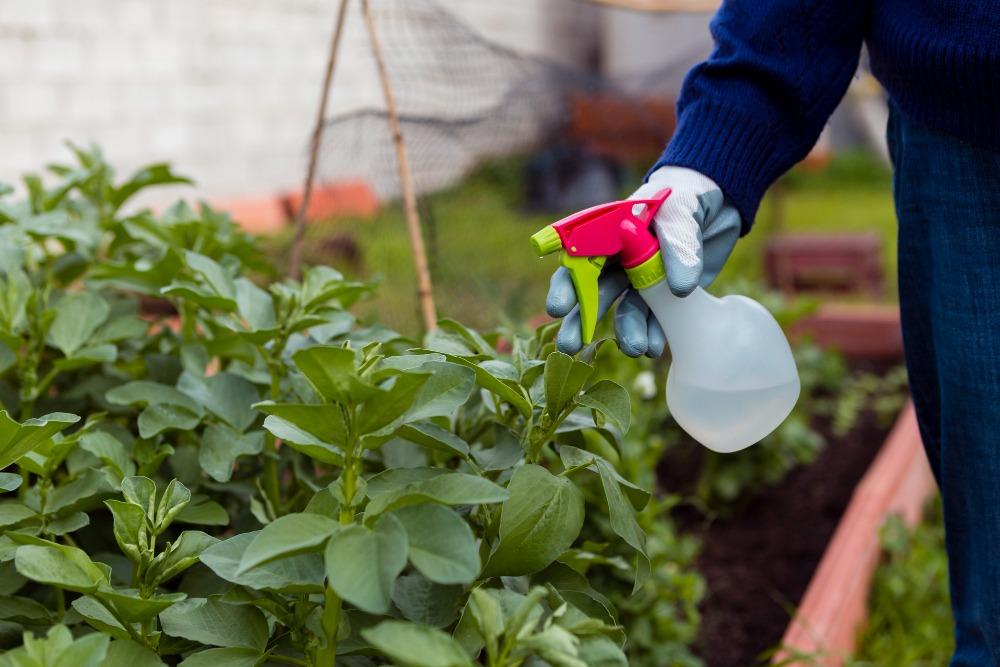
With climate change and increased agricultural diversity, insects are becoming more sophisticated, necessitating effective solutions to protect crops and ensure productivity. This is where the most powerful insecticides for all insects come in, not only to save the growing season but also to guarantee the quality of the final product and consumer safety. In this comprehensive article, we'll take you on a complete journey to understand the world of agricultural insecticides, starting with the most potent active ingredients, moving through the types of insecticides and how to use them, and concluding with modern strategies for combating insect resistance.
What is the strongest insecticide for all insects?
When searching for the most effective insecticide for all insects, the first thing to look at is the active ingredient, not just the brand name. The active ingredient is responsible for killing, repelling, or preventing the insect from completing its life cycle. The insecticide's strength depends on the concentration of this ingredient, its mechanism of action, and how well it penetrates plant tissues. Here is a list of the most potent active ingredients available on the agricultural market:
Cypermethrin
It belongs to the pyrethroid group and acts as both a contact and stomach insecticide. It is highly effective against flying and crawling insects, such as aphids, whiteflies, and caterpillars. It rapidly affects the insect's nervous system, leading to paralysis and death within a few hours. It is widely used on fruits and vegetables.
Abamectin
Abamectin is one of the most popular broad-spectrum biopesticides. It is classified as a weak systemic pesticide, but it is highly effective at penetrating plant tissues and controlling piercing-sucking insects such as thrips, red spider mites, and leaf miners. It is also relatively safe for the environment compared to conventional pesticides.
Imidacloprid
One of the most powerful systemic pesticides available. Once sprayed or applied to the soil, it travels through the plant's vascular system to reach all its parts: roots, stems, leaves, and flowers. It is particularly effective against aphids, mealybugs, and whiteflies. However, it should be used with caution due to its toxicity to bees.
Lambda-Cyhalothrin
It is the latest generation of pyrethroids, characterized by its very high efficacy at low doses. It acts as a fast-acting contact and systemic insecticide and is used to control a wide range of insects in cereals, vegetables, and fruit trees. It also has an insect-repellent effect.
Spinosad
A unique biopesticide produced by soil bacteria. It combines the effectiveness of chemical pesticides with the safety of biopesticides. Effective against leafworms, thrips, and leaf miners, it is preferred for use in integrated pest management (IPM) programs.
Types of agricultural pesticides
To choose the most effective insecticide for all insects, you must understand the differences between insecticide types based on their mode of action. This classification is crucial for successful pest control, especially when dealing with specific pests or particular agricultural conditions.
Contact Insecticides
These pesticides work by direct contact with the insect's body. Once the pesticide is sprayed on the insect or comes into contact with a contaminated surface, the active ingredient enters through the skin, legs, or wings, causing paralysis and rapid death. They are effective against insects visible on the plant's surface.
Systemic Insecticides
These pesticides are absorbed through the plant's roots or leaves and transported with the plant's sap to all parts of the plant. The sap itself becomes toxic to the insect when it feeds on it. These pesticides are ideal for controlling piercing-sucking insects such as aphids, thrips, mealybugs, and insects that hide in leaf crevices or inside the stem.
Stomach Insecticides
These pesticides are designed to be effective when ingested by insects while feeding on treated plant parts. They are often used against chewing insects and larvae that gnaw on leaves or fruit. Some pesticides combine both contact and ingestive action for enhanced effectiveness.
Types of pesticides according to agricultural pests
No single insecticide is 100% effective against all insects, but you can choose the right insecticide based on the type of pest you're targeting. Here's a detailed comparison:
- Aphids: Small pests that reproduce rapidly and transmit viruses. Start with a fast-absorbing systemic insecticide to eliminate hidden colonies.
- Thrips: Tiny insects that hide in flowers and buds, causing deformities and curling. Spray regularly, focusing on new flowers and buds, and repeat spraying due to the short life cycle of thrips.
- Whiteflies cause direct damage as sap-sucking insects, and they secrete honeydew, which promotes fungal growth. Integrated pest management involves using yellow sticky traps in conjunction with systemic insecticides.
- Leaf and fruit caterpillars: These are butterfly larvae that eat leaves and fruit, creating large holes. Apply preventative sprays when the butterflies first appear, or treat them immediately upon seeing eggs or young caterpillars.
- The red palm weevil is the most dangerous pest threatening palm trees in Saudi Arabia and the Gulf region. Spraying alone is not enough; prevention and regular stem injections are the best solutions.
Types of pesticides: The strongest agricultural insecticide for each crop
The choice of the strongest insecticide for all insects varies depending on the crop, because the plant's sensitivity to the insecticide varies, as does the type of pests that are prevalent.
Vegetable crops (tomatoes, cucumbers, peppers, potatoes)
- Common pests: whitefly, thrips, aphids, tomato fruit worms.
- The best insecticides for plants: Spinosad (for worms and thrips), Imidacloprid (for whiteflies and aphids), Abamectin (for spiders).
- Caution: Adhere to the pre-harvest safety period (PHI), especially for cucumbers and tomatoes that are consumed fresh.
Fruit crops (oranges, apples, grapes)
- Common pests: scale insects, mealybugs, spider mites.
- The strongest insecticides for fruit trees: Neem oil (preventive), Spinosad, and Cypermethrin.
- Strategy: Use biopesticides during the flowering period to protect the bees.
Cereal crops (wheat, barley, corn)
- Common pests: from grains, the fall armyworm.
- The strongest pesticides: Lambda-cyhalothrin and Chlorpyrifos.
- Strategy: Aerial or ground spraying in the evening to target active insects.
Palm trees (dates)
- Common pests: Red palm weevil, dubas bug, red palm weevil.
- The strongest pesticides: Imidacloprid injection (for weevils), and cypermethrin spray (for dubas and red mites).
- Strategy: Adherence to the preventive program determined by the Saudi Ministry of Environment.
The difference between EC, SC, WP, and SL pesticide formulations
When purchasing the strongest insecticide for all insects, you will encounter abbreviations such as EC, SC, WP, and SL. These codes indicate the insecticide's formulation and affect its ease of use, effectiveness, and shelf life.
- EC (Emulsifiable Concentrate): Mixes with water to form a milky emulsion. It is highly effective, but may cause plant burns if used in high concentrations or at high temperatures.
- SC (suspension concentrate): Very fine granules suspended in a liquid. Less likely to burn plants, has high surface stability, and is considered the best choice for systemic pesticides.
- WP (wetted powder): A powder that mixes with water. Effective but requires constant stirring during spraying to avoid settling.
- SL (Liquid Concentrate): A liquid solution ready to mix with water. Very easy to use and mixes quickly.
How to use agricultural pesticides correctly
Having the strongest agricultural insecticide for all insects is not enough if you don't use it correctly. Misuse leads either to ineffectiveness, the development of insect resistance, or the accumulation of toxic residues in the crop.
- Accurately identify the type of pest: Before spraying, make sure you know the type of insect. Spraying with a pesticide against leafworms will not kill the palm weevil.
- Read the leaflet: Each pesticide has an instruction leaflet approved by the Ministry of Environment. It specifies the spraying rate (e.g., 50 ml per 100 liters of water) and the safety period.
- Mixing ratio: Always use a calibrated measuring device. Increasing the concentration does not mean increasing effectiveness; it may cause plant burns and increase pollution.
- Spraying time: It is best to spray in the early morning or evening after sunset. Avoid spraying in the middle of the day when the sun is high, or when the wind is strong.
- Complete coverage: Ensure the solution reaches the undersides of leaves and insect hiding places. Use appropriate spray nozzles.
- Cleaning the equipment: Wash the tank and hoses thoroughly after spraying to prevent damage to other crops in the future.
Pre-harvest intervals (PHI) for major pesticides
The pre-harvest interval (PHI) is the number of days that must pass between the last pesticide application and harvesting. Adhering to this interval protects consumer health and maintains product quality for export.
- Imidacloprid: Safety period of 7-14 days depending on the crop.
- Abamectin: 3-7 days on vegetables.
- Cypermethrin: Usually 7 days.
- Spinosad: Only 1-3 days, making it ideal for crops close to harvest.
- Lambda-cyhalothrin: from 7-14 days.
Al Talib Store for buying the strongest insecticide
If you're looking for the strongest insecticide for all insects, with original concentrations, competitive prices, and fast shipping to all regions of Saudi Arabia, then Al Talib Store is your first choice. We provide you with:
- 100% original pesticides registered with the Saudi Ministry of Environment.
- A wide range of systemic, contact, and biological pesticides for all crops (vegetables, fruits, palms, grains).
- Free agricultural consultations to help you choose the right product for your pest.
- Exclusive offers on top international brands such as: Cypermethrin, Imidacloprid, Abamectin, Spinosad, and Lambda-cyhalothrin.
Conclusion
Finding the most effective insecticide for all insects isn't just a purchase; it's a comprehensive strategy that begins with understanding the nature of the pest, selecting the appropriate active ingredient, and applying the insecticide correctly, while adhering to safety periods and rotating chemical formulations to maintain pesticide effectiveness for as long as possible. Therefore, you can contact Al-Talib Store to determine the best product for your crop and the type of pest you are dealing with.
Frequently asked questions about the most powerful insecticide for all insects
What is the strongest insecticide for all insects on the Saudi market?
No single pesticide eliminates all insects 100%. However, pesticides containing a combination of a systemic agent, such as imidacloprid, and a contact insecticide, such as cypermethrin, offer a very broad spectrum of effectiveness. To choose the most suitable option, it is advisable to consult an agricultural engineer or contact Al-Talib Store for a personalized consultation for your crop.
How can I be sure that the pesticide I buy is genuine and not counterfeit?
Make sure the product label is in Arabic, and includes the production and expiry dates, as well as the registration number from the Ministry of Environment. Purchasing from reputable stores like Al-Talib Store guarantees you receive 100% genuine products.
Is it possible to mix an insecticide with a fungicide in one spray?
This is sometimes possible, but chemical compatibility must be ensured. Test in a small container before mixing in the main tank. It's best to use pre-mixed pesticides or consult a professional.
When is the best time to spray insecticides?
The best time is early morning after the dew has dried, or in the evening before sunset. Avoid spraying at midday or when the wind is strong.
What is the Pre-Inhibition Period (PHI) and how do I know it?
The safety period is the time between the last application and harvesting. It is stated on the pesticide's instructions. Adhering to this period protects your health and the health of consumers.